

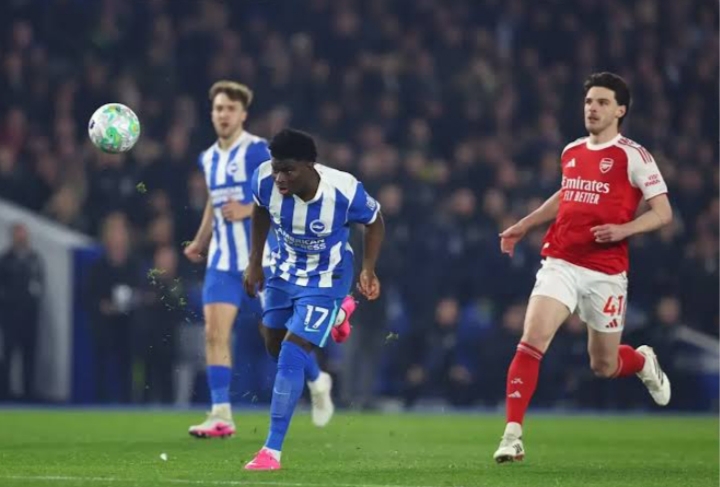
Manchester United’s recent move to appoint Geoffrey Baleba as their ‘third midfielder’ highlights a strategic effort to strengthen their midfield squad. As the club continues its rebuilding phase under current management, this decision demonstrates their confidence in Baleba’s potential and their intention to expand their midfield depth.
Baleba, a promising young midfielder, has caught the attention of scouts and analysts with his composure, vision, and adaptability on the pitch. Assigning him the role of third midfielder emphasizes the club’s plans to nurture him into a key player for the future. Additionally, this move offers Manchester United greater tactical flexibility, enabling them to adopt more versatile formations and make effective substitutions during matches.
The position of the third midfielder has become increasingly important in modern football, especially for a club like Manchester United that competes on multiple fronts. It allows the team to adapt to different game situations—whether maintaining possession, supporting attacks, or strengthening the defense. Including Baleba in this role indicates the club’s trust in his ability to handle these responsibilities.
Furthermore, this decision aligns with Manchester United’s broader strategy of integrating young talent into their main squad. By clearly defining Baleba’s role, the club is investing in his growth and signaling that he is part of their long-term plans.
In summary, Manchester United’s choice to make Baleba their third midfielder reflects a well-thought-out approach to squad building and future success. With proper development and opportunities, the young talent could become a crucial figure for the club in the seasons to come.